

Medicana Uses Robot-Assisted Technology to Perform Heart Surgery Through Small Ports
Medicana Health Group’s Prof. Suat Büket, MD explains how selected bypass and heart-valve procedures can be completed without dividing the breastbone while maintaining the same surgical objective
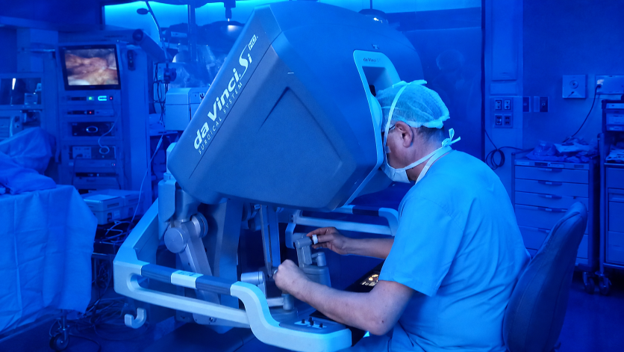
Photo: Robotic heart surgery at Medicana Health Group via FL Comms
ISTANBUL, Sept. 09, 2026 (GLOBE NEWSWIRE) -- For selected heart patients, complex surgery can now be performed through several small openings between the ribs rather than by dividing the breastbone. Robot-assisted cardiac surgery combines a surgeon-controlled console with high-definition three-dimensional imaging, tremor filtration and highly articulated instruments, offering a minimally invasive route to procedures that have traditionally required a full sternotomy.
Prof. Suat Büket, MD, a cardiovascular surgeon at Medicana Health Group, said the most important point is often misunderstood: the robot does not perform the operation independently.
“The surgeon remains in control at every stage. The system translates the surgeon's hand movements into precise movements inside the chest. Its value lies in giving us a magnified three-dimensional view and a range of motion that is difficult to achieve with conventional instruments through a small opening,” said Prof. Büket.
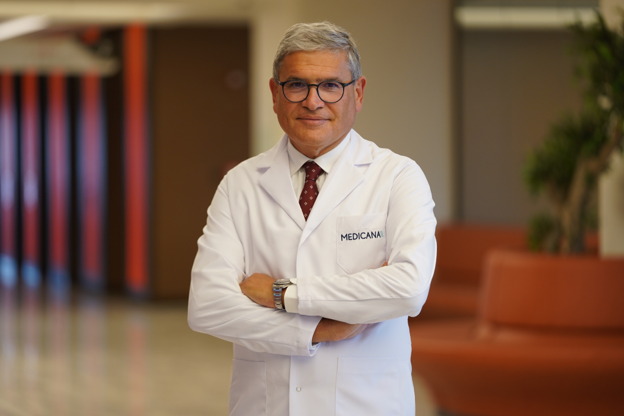
Photo: Prof. Suat Büket, MD via FL Comms
Several small ports instead of a divided breastbone
In conventional open-heart surgery, access to the heart often requires a midline incision and division of the sternum. The bone is then rejoined at the end of the operation and must heal over the following weeks, during which patients may face movement restrictions. Wound and bone-healing complications can be particularly challenging for patients with certain risk factors.
In robot-assisted cardiac surgery, the surgical team can access the chest through three or four ports between the ribs, each approximately one centimetre, depending on the planned operation. A camera and the robotic instruments are introduced through these openings. The surgeon operates from a console in the operating theatre while the bedside team supports the procedure.
Technology expands the surgeon's view and reach
The system's high-definition camera provides a three-dimensional, magnified view of the operative field. Wristed instruments can bend and rotate beyond the range of the human hand, while computer-assisted tremor filtration supports steady movement. These features are designed to help the surgeon work precisely in confined anatomical spaces; they do not replace clinical judgement or the surgical team.
The robot is a surgical instrument — not an autonomous decision-maker. Patient selection, operative planning and every surgical movement remain the responsibility of the trained clinical team.
The surgical objective does not change
Prof. Büket stressed that a minimally invasive approach should not mean a reduced operation. When robot-assisted surgery is clinically appropriate, the aim is to complete the same planned cardiac repair or revascularisation that would otherwise be performed through an open approach.
“If the plan is to perform bypass grafting or repair or replace a heart valve, the objective remains the same. The difference is the route we use to reach the heart. A smaller incision must never mean an incomplete procedure,” he said.
Recovery benefits depend on the right patient
Avoiding sternotomy may reduce the burden of bone healing and allow some patients to return to everyday movement sooner. Smaller incisions may also reduce wound-related concerns and can offer cosmetic and psychosocial benefits. However, not every patient is a candidate. The decision depends on the planned procedure, anatomy, previous operations, vascular access and the findings of pre-operative tests.
“Robotic cardiac surgery is not automatically the best option simply because the incisions are smaller,” Prof. Büket said. “The safest and most effective approach is selected after a complete assessment. Technology adds value when it is matched to the right patient, the right procedure and an experienced team.”
From precision tools to connected operating rooms
Robot-assisted surgery also points toward a more connected future for operating theatres. Research into remote surgical support and telesurgery continues, but current practice still depends on a trained surgical team, specialist infrastructure and direct clinical oversight. For Prof. Büket, the immediate priority is not distance but precision: using the technology available today to reduce surgical trauma without compromising the completeness or safety of the operation.
About Medicana Health Group
Founded in 1992, Medicana Health Group is one of Türkiye’s leading privately owned healthcare providers, operating 19 hospitals in Türkiye, the United Kingdom, and Bosnia and Herzegovina. Serving more than 5 million patients annually, including a significant international patient base, Medicana delivers multidisciplinary care across a broad range of specialties with a strong focus on clinical excellence and patient-centered service. In addition to healthcare, the Group invests in education through Medicana Education Group and Fenerbahçe University. With approximately 15,000 employees, Medicana continues to expand its international footprint while advancing sustainability through renewable energy investments and supporting Turkish sports through long-term health sponsorships.
Media contact
Uğur Alkapar
Global Media Relations Director
FL Communications
ugur@flcommunications.co.uk
This press release is intended for general informational purposes. Treatment decisions must be made by qualified clinicians following an individual patient assessment.
Photos accompanying this announcement are available at
https://www.globenewswire.com/NewsRoom/AttachmentNg/7b10f86c-bc1f-41a5-a99e-3a5afb79b174
https://www.globenewswire.com/NewsRoom/AttachmentNg/92e8455e-008d-4a4a-9c60-1b85de881324


Robotic heart surgery at Medicana Health Group
Medicana Health Group’s Prof. Suat Büket, MD explains how selected bypass and heart-valve procedures can be completed without dividing the breastbone while maintaining the same surgical objective.
Prof. Suat Büket, MD

Medicana Health Group’s Prof. Suat Büket, MD explains how selected bypass and heart-valve procedures can be completed without dividing the breastbone while maintaining the same surgical objective
Legal Disclaimer:
EIN Presswire provides this news content "as is" without warranty of any kind. We do not accept any responsibility or liability for the accuracy, content, images, videos, licenses, completeness, legality, or reliability of the information contained in this article. If you have any complaints or copyright issues related to this article, kindly contact the author above.
